I paid ₹999 for a folder of prompts. I used none of it.
Not because the prompts were bad. I didn’t use them because I didn’t understand why they were structured the way they were. I had bought someone else’s output without any of their thinking. That folder now sits alongside fifty-something workflow templates I’ve collected and never deployed, a pantry full of other people’s solutions to problems I haven’t quite diagnosed as my own.
That gap, between copying a prompt and knowing what you’re bringing to it, is what most of the AI productivity conversation is missing.
The market has a shape.
Since ChatGPT launched in 2022, prompt engineering became a $0.85 billion market growing at 32% annually. LinkedIn saw a 434% increase in prompt engineering job postings between 2023 and 2024. Courses, packs, agencies, templates, masterclasses, a full industrial pyramid, with “done-for-you AI automation” at the bottom and genuine expertise at the top.
The problem: each layer down the pyramid moved further from thinking and closer to copy-paste. By the time you reach the bottom, you’re not buying expertise. You’re buying someone else’s template, applied to your problem by someone who hasn’t actually examined your problem.
The real research finding.
A UC Berkeley study published at CHI 2023 found that non-experts consistently bring two assumptions to every prompt session: they treat the model like a human communicator (expecting it to infer what they meant from what they said), and they give up after one failed attempt. Neither failure is about formatting. Both are about assumptions.
This is a mental model problem, not a craft problem. A better template doesn’t fix it. A better template is the problem.
Why we don’t ask why.
In educational systems built around pattern recognition and correct-form reproduction, where unsolicited inquiry gets reframed as disruption, you don’t develop the habit of interrogating structure. You learn to follow templates. You learn to feel reassured by organised form.
That orientation follows you into a prompt session. You write carefully. You follow the LinkedIn post’s framework. The output arrives, coherent and slightly wrong. You adjust the words. You never ask: why did I frame it this way to begin with?
The confidence trap.
LLMs produce confident, well-structured text regardless of whether your request was well-specified. There’s no signal when an assumption has been filled in. A Microsoft Research study found clinicians were seven times more likely to accept a wrong AI recommendation than to override it with their own correct judgment. Seven times. The AI just had to be confident and present.
When you bring an unexamined assumption to a prompt, about audience, purpose, format, what “good” means, the model works inside that assumption and returns something plausible. Plausible and right are not the same thing.
What verification actually requires.
Before you prompt, answer three questions:
What specific outcome does this output need to produce? (Not what should it say, what should it do?)
Who is it for, and what do they already know and believe?
What would a wrong answer look like?
If you can’t answer all three, you don’t yet know what you’re asking for.
The skill nobody’s selling.
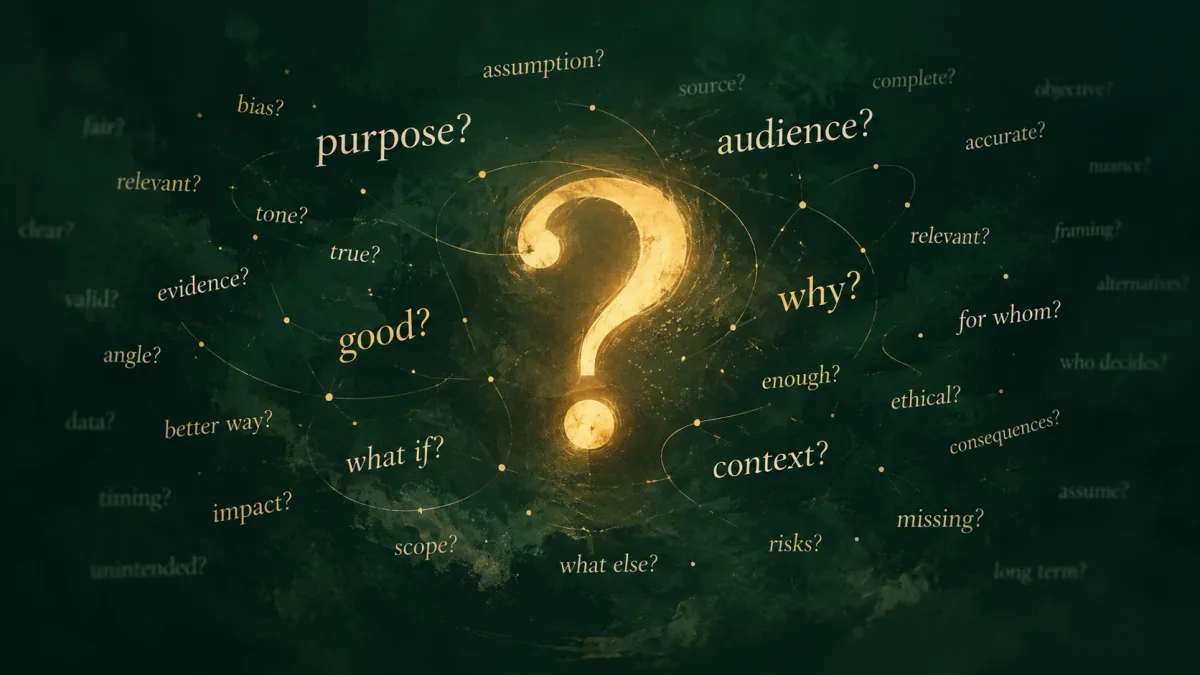
Instead of asking “what’s the best way to phrase this?”, ask “what am I assuming about this task that I haven’t said out loud?”
That diagnostic question is what domain experts bring to prompting. Not more knowledge about AI. The habit of identifying the gap between what a brief states and what it means. That habit doesn’t deprecate when models change. It compounds.
When GPT-3.5 prompting techniques became obsolete in GPT-4, the people who had bought templates found their investment had decayed. The people who had built the habit of examining assumptions found their investment had compounded.
The ₹999 folder is still in my Drive. It’s a useful reminder of what happens when I acquire someone else’s output without understanding their problem. The question it keeps prompting is: what am I assuming here that I haven’t examined?
That question is free. It always has been. It’s the only thing in this space that doesn’t come with a price tag, and the only thing that doesn’t expire.
Read the full research paper on Substack → HERE