AI & Work
Decide what finished looks like before you ask AI for anything
A lot of disappointing AI output starts with a request that never described the result. Five short lines written before the prompt help a person, and help a team even more.
AI & Work
A lot of disappointing AI output starts with a request that never described the result. Five short lines written before the prompt help a person, and help a team even more.
AI & Work
Many companies now let AI make some decisions without a person signing off. Before you do the same, settle three questions about ownership.
AI & Work
The fastest way to lose a room's confidence in a presentation is to cite a number you cannot trace. A single habit fixes this, and AI makes the habit more necessary.
AI & Work
Many leaders have told their teams to try AI. Fewer have said what it is for. A one-sentence test shows which kind of message your team received.
AI & Work
Every explanation starts from what the speaker knows. The gap between that and what the listener knows is where most communication goes wrong, and a prompt to an AI has the same gap.…
AI & Work
Nine in ten learning and development teams now use AI. Fewer than one in ten have embedded it consistently into how they work.
AI & Work
AI can produce finished work without developing the person behind it. This is what an experienced practitioner changes for an organisation, one person at a time or a whole team at once.…
AI & Work
Polished writing used to be a fair sign that someone had done the work. With AI producing polish on demand, the habit of trusting it is an assumption worth examining.
AI & Work
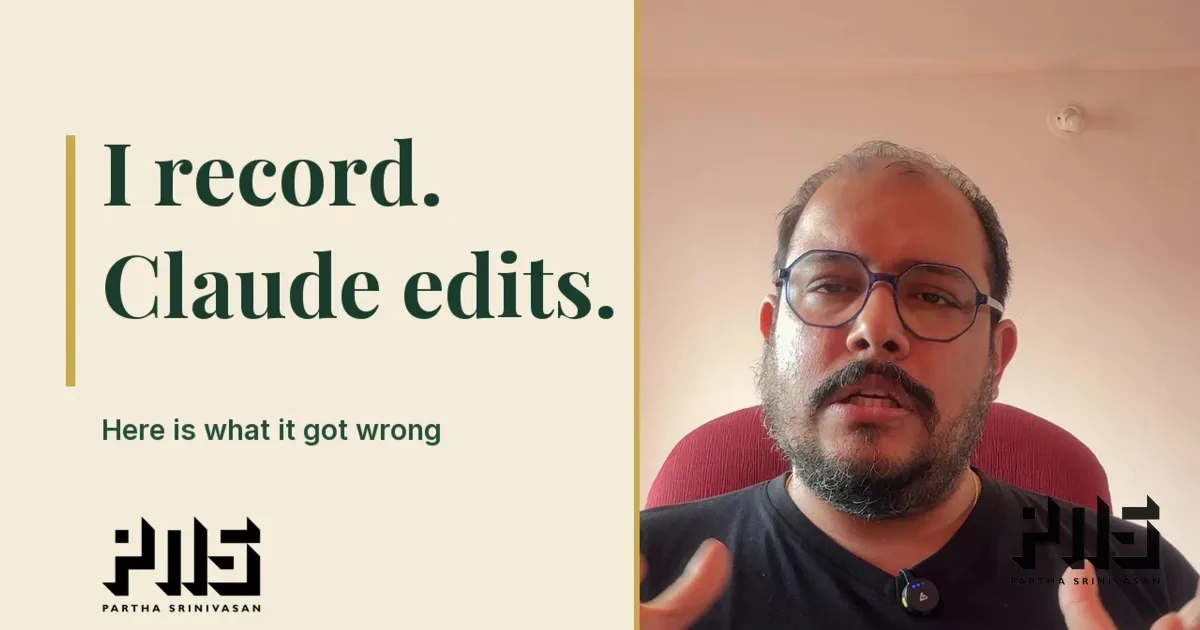
I record. Claude edits, checks its own work, and stops at a draft. How it works, what I refused to let it do, and what the first video taught me.
AI & Work
The assumptions you bring to a prompt matter more than the prompt itself. This paper argues that the gap between what AI tools can do and what most people get from them is not a capability gap or a formatting gap. It is a diagnostic gap, built from unexamined assumptions about audience, purpose, and what “good” actually means. It draws on research in human-computer interaction, cognitive psychology, and decision science to make the case that the prompt engineering industry has, almost entirely, been selling solutions to the wrong problem. Seven sections. One uncomfortable question: what are y…